
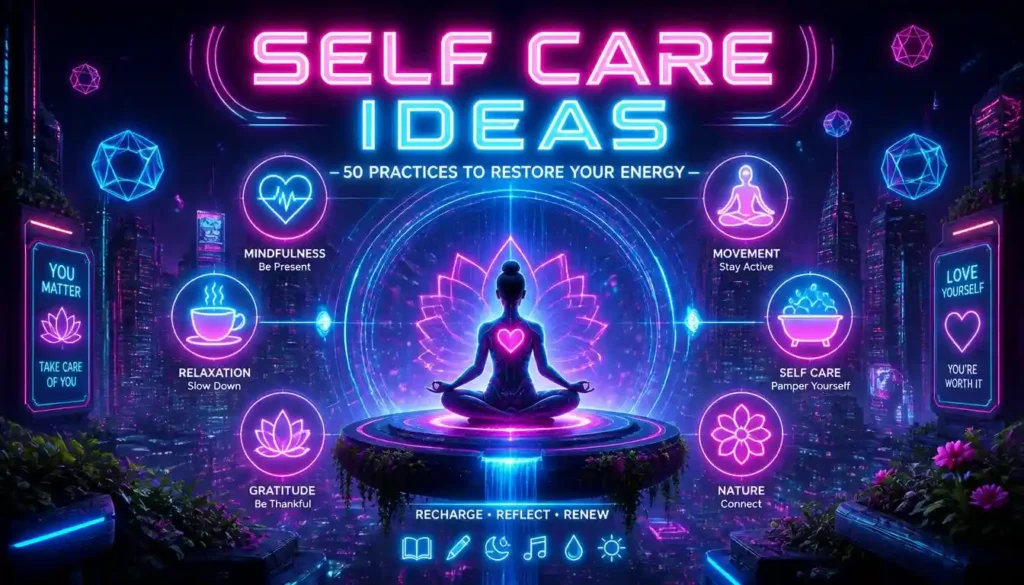

Running on empty has become normal for a lot of people — but it doesn’t have to be. Self care isn’t about bubble baths and buzzwords; it’s about small, consistent practices that refill your mental, physical, and emotional tank. Below are 50 self care ideas you can start using today to restore your energy, reduce stress, and feel more like yourself again.
What Is Self Care, Really?
Self care is any intentional action you take to protect and restore your physical, emotional, mental, or social well-being.
In short: Self care means deliberately meeting your own needs — rest, nourishment, connection, and boundaries — so you have the energy to show up fully in the rest of your life.
It’s not selfish, and it’s not indulgent. It’s maintenance. Just like a car needs fuel and regular servicing to keep running, your mind and body need consistent care to keep functioning well.
The 7 Types of Self Care
Most self care frameworks break down into seven overlapping categories:
- Physical – sleep, movement, nutrition, rest
- Emotional – processing feelings, self-compassion
- Mental – stimulating your mind, managing thoughts
- Social – healthy relationships and connection
- Spiritual – meaning, values, purpose
- Practical – organizing life so it runs smoothly
- Environmental – a calm, clean physical space
Real self care touches more than one of these areas — which is why 50 practices, spread across categories, work better than relying on just one habit.
Why Self Care Matters More Than Ever
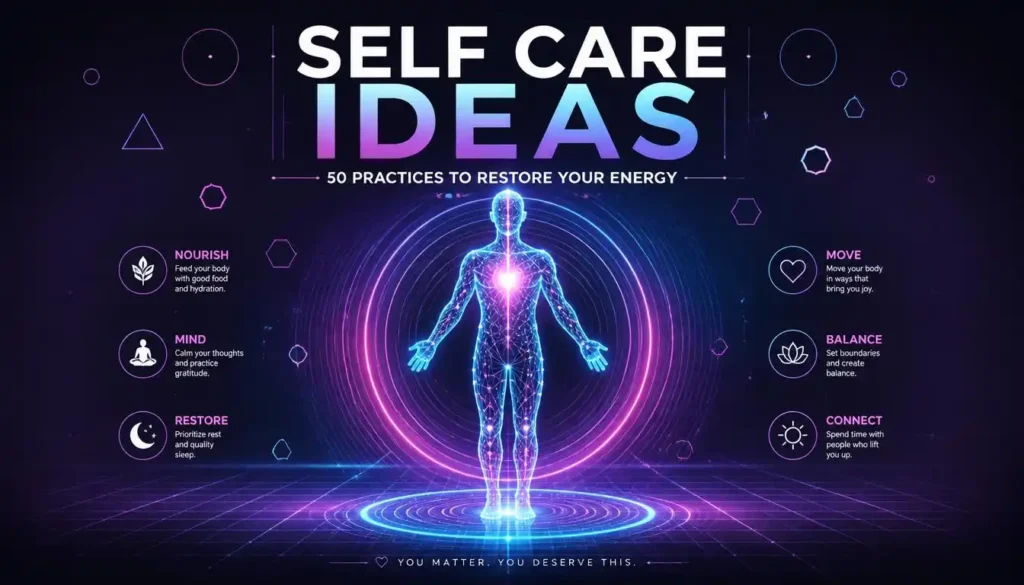
Chronic stress isn’t just uncomfortable — it has measurable physical effects. According to the World Health Organization, prolonged stress contributes to elevated cortisol levels, disrupted sleep, weakened immunity, and increased risk of anxiety and depression.
Self care matters because it:
- Prevents burnout before it becomes chronic exhaustion
- Regulates your nervous system, lowering cortisol and stress reactivity
- Improves focus and decision-making by giving your brain real recovery time
- Strengthens relationships, since depleted people struggle to show up for others
- Builds long-term resilience, not just short-term relief
If you’re building healthier habits generally, our guide on why personal development matters explains how small daily practices like self care compound into meaningful long-term change.
Physical Self Care Ideas (1–10)
Physical self care restores energy at the body level — often the fastest place to feel a difference.
- Prioritize 7–9 hours of sleep and keep a consistent bedtime
- Take a 10-minute walk outside, ideally in natural light
- Stretch for 5 minutes every morning or before bed
- Stay hydrated — dehydration is a hidden energy drain
- Eat a real meal, not just coffee, before noon
- Take a warm shower or bath to physically reset your nervous system
- Do a short home workout — even 15 minutes counts
- Get outside for sunlight within an hour of waking
- Nap for 20 minutes (no longer) when you’re depleted
- Give yourself a hand or foot massage to release physical tension
Emotional Self Care Ideas (11–20)
Emotional self care means processing feelings instead of suppressing them.
- Journal for 5–10 minutes about how you’re actually feeling
- Name the emotion you’re experiencing instead of avoiding it
- Practice self-compassion — talk to yourself like you would a friend
- Cry if you need to — suppressing emotion increases stress load
- Set one small boundary you’ve been avoiding
- Say no to something that isn’t serving you
- Talk to someone you trust about what’s weighing on you
- Practice a gratitude list of 3 things, however small
- Forgive yourself for one thing you’ve been holding onto
- Unfollow accounts that consistently make you feel worse
Mental Self Care Ideas (21–28)
Mental self care restores focus and reduces cognitive overload.
- Take a real lunch break away from screens
- Do a digital detox for a set block of time each day
- Read something unrelated to work for 15 minutes
- Do a puzzle or brain game to shift mental gears
- Declutter one small space — physical clutter adds mental load
- Practice a 5-minute mindfulness or breathing exercise
- Write down tomorrow’s top 3 tasks to quiet racing thoughts
- Limit news consumption to a specific window of time
Social Self Care Ideas (29–35)
Humans are wired for connection — isolation quietly drains energy.
- Call or text a friend just to check in
- Schedule a coffee or walk with someone you enjoy
- Join a group or class around a shared interest
- Have a boundary-setting conversation you’ve been avoiding
- Spend quality time with a pet
- Reconnect with an old friend you’ve lost touch with
- Ask for help with something instead of doing it alone
Spiritual & Practical Self Care Ideas (36–45)
These practices connect you to meaning and reduce daily friction.
- Spend 5 minutes in quiet reflection or meditation
- Revisit your personal values and check if your week reflects them
- Spend time in nature without your phone
- Practice a moment of gratitude or prayer, if that fits your beliefs
- Organize your calendar for the week ahead
- Batch small errands into one block instead of scattering them
- Prep meals or snacks in advance for a smoother week
- Automate one recurring bill or task
- Tidy your workspace before starting or ending your day
- Unsubscribe from unnecessary emails to reduce daily noise
Quick Self Care Ideas for a Stressful Day (46–50)
When time is short, these take five minutes or less.
- Take 5 deep breaths, extending the exhale longer than the inhale
- Step outside for fresh air, even for two minutes
- Drink a full glass of water slowly and mindfully
- Play one song that shifts your mood
- Put your phone away for 10 uninterrupted minutes
How to Build a Self Care Routine That Actually Sticks
Fifty ideas are only useful if you actually use them. Here’s how to turn a list into a routine:
- Pick 2–3 practices, not all 50, to start with
- Anchor them to an existing habit — stretching after you brush your teeth, journaling before bed
- Keep a visible self care checklist so it’s not just a mental note
- Rotate practices based on what type of depletion you’re feeling — physical, emotional, or mental
- Track consistency, not perfection — a missed day doesn’t mean starting over
A report from the American Psychological Association notes that even brief, consistent stress-relief practices are more effective for long-term well-being than infrequent, intense interventions.
How Often Should You Practice Self Care?
Short answer: Some form of self care should happen daily, even if it’s just 5–10 minutes, with deeper practices scheduled weekly.
Think of it in three layers:
- Daily – quick practices like breathing, hydration, or a gratitude note
- Weekly – deeper practices like social connection, movement, or decluttering
- Monthly – bigger resets like a full digital detox day or a solo outing
Signs You Need More Self Care
- Feeling irritable or on edge over small things
- Trouble sleeping or feeling tired even after rest
- Losing interest in things you normally enjoy
- Constant mental fog or forgetfulness
- Feeling resentful of your own responsibilities
- Physical tension — clenched jaw, tight shoulders, headaches
If several of these sound familiar, it’s less about doing more and more about slowing down long enough to notice what’s actually depleted.
Self Care vs. Self Indulgence: What’s the Difference?
Self care restores your capacity to function well; self indulgence temporarily numbs discomfort without addressing it. A bath after a hard day can be either — the difference is intention. Self care asks, “What do I need right now?” Self indulgence avoids the question altogether.
Frequently Asked Questions
What are good self care ideas? Good self care ideas include getting enough sleep, moving your body, journaling, setting boundaries, spending time outdoors, and disconnecting from screens for part of the day.
How can I restore my energy naturally? Prioritize consistent sleep, hydration, sunlight exposure, and short breaks throughout the day, while reducing constant digital stimulation.
What is the 7 types of self care? The seven types are physical, emotional, mental, social, spiritual, practical, and environmental self care.
How do I start a self care routine? Start with just 2–3 small practices, attach them to habits you already have, and build consistency before adding more.
How often should you practice self care? Ideally daily in small doses, with deeper self care practices built into your weekly and monthly routine.
What’s the difference between self care and selfishness? Self care restores your ability to function and care for others sustainably, while selfishness disregards others’ needs entirely — the two aren’t the same.
Final Thoughts: Small Practices, Real Energy
You don’t need all 50 of these at once. Pick a few that speak to where you’re depleted right now — physically, emotionally, or mentally — and build from there. Real self care isn’t a one-time reset; it’s the small, repeated choices that keep your energy sustainable over time.
For more guidance on building habits that support your well-being long-term, explore our personal development guide or check out simple self development activities that pair well with a self care routine.
Ready to build a routine that actually restores your energy? Explore more practical, research-backed guides on Rise By Inches, or get in touch if you’d like personalized support putting these ideas into practice.



Pingback: Best Self Improvement Blogs (2026):Top Personal Growth Sites
Pingback: 7 Goal Setting Strategies Top Performers Swear By
Pingback: How to Stay Motivated at Work: 13 Tactics That Stick
Pingback: 20 Real Personal Development Examples & Growth Stories
Pingback: Why Taking a Mental Health Day: When, and How to Do It?