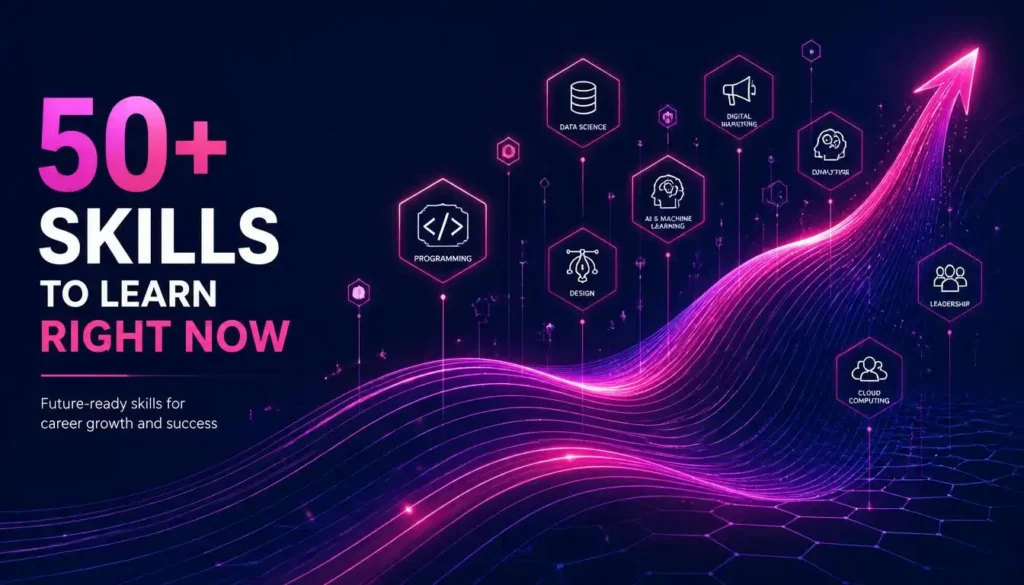

The job market of 2026 rewards people who keep growing. If you’ve been searching for the best skills to learn for career growth, you’re not alone—millions of professionals are rethinking what they need to stay relevant as automation, AI, and remote work reshape every industry. This guide breaks down more than 50 in-demand skills, why they matter, and exactly how to start learning them today, whether you’re aiming for a promotion, a career pivot, or your first big break.
What Does “Skills to Learn to Boost Your Career” Actually Mean?
When people talk about career skills to learn right now, they’re usually referring to two categories: hard skills (technical, teachable abilities like data analysis or coding) and soft skills (human, transferable abilities like communication and adaptability). Boosting your career means intentionally closing the gap between what you currently offer and what employers — or clients, if you’re self-employed — actually need.
This isn’t about collecting certificates for their own sake. It’s about upskilling for career growth in a way that’s strategic, sustainable, and tied to real outcomes: raises, promotions, better job offers, or a smoother career pivot.
Why Learning New Skills Is More Important Than Ever

The workplace is changing faster than most job descriptions can keep up with. A few reasons this matters right now:
- Automation is reshaping roles. Repetitive tasks are increasingly handled by software and AI, which means human value is shifting toward judgment, creativity, and relationship-building.
- The skills gap is real. Many employers report struggling to find candidates with the right mix of technical and soft skills, according to workforce research from the World Economic Forum. This gap is exactly why upskilling has become a competitive advantage rather than a nice-to-have.
- Career resilience depends on adaptability. People who treat learning as a one-time event (a degree, a certification) tend to stall. People who treat it as an ongoing habit tend to keep moving up.
- Remote and hybrid work reward self-direction. Without a manager watching over your shoulder, skills like time management and communication matter even more.
If you want a deeper look at why continuous growth matters for your mindset and habits, our guide on the importance of personal development breaks down the psychology behind lasting change.
The Core Categories: Where to Focus Your Energy
Rather than treating this as a random list, group your learning into three buckets. This is how top performers actually build a skill set that compounds over time.
1. Technical & Digital Skills
2. Human & Cognitive (Soft) Skills
3. Career Infrastructure Skills (branding, learning systems, networking)
Let’s go through each in detail.
Technical & Digital Skills to Learn Right Now
These are the hard skills currently driving the most hiring demand across industries.
AI & Automation Skills
- Prompt engineering — writing effective instructions for AI tools
- AI tool proficiency — using tools like chatbots, image generators, and automation platforms
- Machine learning basics — understanding how predictive models work
- AI ethics and responsible use — knowing the limits and risks of AI systems
- Workflow automation — connecting apps and tasks so repetitive work runs itself
Data & Analytics Skills
- Excel and spreadsheet modeling
- SQL for querying databases
- Python for data analysis
- Data visualization (dashboards, charts, storytelling with numbers)
- Basic statistics and interpreting trends
Cloud & Infrastructure Skills
- Cloud computing basics (AWS, Azure, Google Cloud)
- Cybersecurity fundamentals
- Data privacy and protection practices
- Basic IT troubleshooting
Design & No-Code Skills
- UI/UX design fundamentals (Figma, Canva)
- No-code app building (Bubble, Airtable, Webflow)
- Short-form video editing
- Basic motion graphics
- Website building and WordPress basics
Marketing & Growth Skills
- SEO and search strategy
- Content marketing and copywriting
- Social media strategy
- Email marketing
- Basic paid advertising (Meta, Google Ads)
Human & Cognitive Skills That Employers Actually Want
Technical skills get you noticed. Soft skills get you promoted. Employers consistently rank these as the traits that separate good employees from great ones.
- Critical thinking and problem-solving
- Communication skills (written, verbal, and presentation)
- Emotional intelligence
- Adaptability and flexibility
- Time management and prioritization
- Active listening
- Conflict resolution
- Negotiation skills
- Leadership and team management
- Strategic thinking
- Cross-cultural communication
- Public speaking and storytelling
- Feedback-giving and receiving
- Decision-making under pressure
- Resilience and stress management
Research from the American Psychological Association has long shown that emotional regulation and adaptability directly influence workplace performance and long-term career satisfaction—which is why these “soft” skills are anything but optional.
If you want to build the mindset that supports these skills in the long term, our personal development guide is a good next step, and our mindset and motivation category covers the psychology behind sustained growth.
Career Infrastructure Skills (The Ones People Skip)
These don’t always show up on job descriptions, but they’re what make everything else work.
- Personal branding
- Networking and relationship-building
- Resume and LinkedIn optimization
- Interview skills
- Financial literacy (budgeting, negotiating salary, understanding equity)
- Goal setting and tracking
- Habit building for consistency
- Self-directed learning (knowing how to teach yourself anything)
- Delegation
- Project management basics
- Multilingual communication
- Digital literacy and remote collaboration tools
- Personal productivity systems
For a structured approach to setting and tracking these goals, check out our goal-setting category, and for the daily systems that make consistency possible, our habits and productivity hub has practical breakdowns.
Job Scope, Salary, and Demand: What the Data Shows
Not every skill carries equal weight in the job market. Here’s a general sense of where demand and pay tend to concentrate:
| Skill Category | Demand Level | Typical Salary Impact | Learning Curve |
|---|---|---|---|
| AI & Automation | Very High | High | Moderate |
| Data & Analytics | Very High | High | Moderate to Steep |
| Cloud & Cybersecurity | High | High | Steep |
| Design & No-Code | High | Moderate | Moderate |
| Marketing & Growth | High | Moderate to High | Moderate |
| Soft Skills (all) | Universal | Moderate but compounding | Ongoing |
| Career Infrastructure | Universal | Indirect but significant | Low to Moderate |
Skills that combine a technical foundation with strong communication tend to command the highest pay, because they let you both do the work and explain its value to non-technical stakeholders. This is why professionals who pair a hard skill (like data analysis) with a soft skill (like storytelling) often outpace peers who only specialize in one lane.
Why Choose Rise By Inches to Guide Your Growth
There’s no shortage of generic career advice online. What makes Rise By Inches different is the focus on sustainable, incremental growth—the idea that career transformation doesn’t happen overnight; it happens one deliberate habit and one deliberate skill at a time.
Here’s what sets it apart:
- Practical, no-fluff content grounded in real behavioral science, not recycled listicles
- A structured content library covering personal growth basics, mindset, habits, and goal-setting—so you’re not just learning a skill in isolation; you’re building the mindset to sustain it
- A clear roadmap, from understanding personality development to applying self-development activities you can start today
- A community-first approach to growth rather than a one-size-fits-all course
If you’re ready to go deeper, you can learn more about Rise By Inches or get in touch directly with questions about where to start.
How to Learn These Skills: Free and Paid Resources
You don’t need a four-year degree to build most of these skills. Here’s a realistic roadmap.
Free Resources
- YouTube tutorials for hands-on skills like Excel, design tools, and coding basics
- Free courses on Coursera, many offered directly by universities and companies
- Public library resources, including free access to LinkedIn Learning in many regions
- Community forums and Reddit communities specific to your target skill
- Company blogs from tech providers (Google, Microsoft, HubSpot, all publish free training material)
Paid Resources
- Structured certification programs (Google Career Certificates, Coursera Specializations)
- Cohort-based courses with mentorship and accountability
- Books and audiobooks from recognized industry experts
- One-on-one coaching or mentorship for soft skills like leadership and communication
- Paid bootcamps for intensive technical skills like coding or data analysis
A Simple Learning Framework
- Pick one skill from each category (technical, soft, infrastructure) rather than trying to learn everything at once
- Set a 30-60-90-day learning plan with small, trackable milestones
- Apply the skill immediately in your current job, a side project, or freelance work
- Teach it to someone else—this cements retention faster than passive learning
- Reassess every quarter and rotate in a new skill as one becomes second nature
Real-World Examples: How These Skills Play Out
- A marketing coordinator who learned basic SQL and data visualization was able to build her own reporting dashboards, saving her team hours weekly and making her the go-to person for campaign performance—a direct path to her promotion to marketing manager.
- A customer support rep who focused on emotional intelligence and conflict resolution became the person whom leadership trusted with escalated client issues, eventually moving into a client success role.
- A freelance designer who added no-code app building to his skill set was able to offer end-to-end MVP builds to startup clients, tripling his average project fee.
- A mid-career professional who prioritized public speaking and personal branding went from an internal specialist role to a recognized voice at industry conferences within two years.
The pattern across all of these: it’s rarely one skill alone. It’s the combination of a technical capability with a human one that creates outsized career results.
Future Career Opportunities Tied to These Skills
Looking ahead, a few intersections are worth watching closely:
- AI-augmented roles—professionals who can work alongside AI tools (not compete with them) will be in the highest demand across nearly every industry
- Hybrid technical-communication roles — think data storytellers, technical product managers, and AI trainers who bridge complex systems and human decision-making
- Remote-first leadership—managers who can lead distributed teams with strong communication and emotional intelligence will be prioritized over those who rely purely on in-person oversight
- Freelance and portfolio careers—as more professionals build multiple income streams, skills like personal branding, financial literacy, and self-directed learning become foundational rather than optional
Understanding how to better yourself as a continuous practice — not a one-time fix — is what will separate professionals who thrive in this shift from those who get left behind.
Frequently Asked Questions
What are the most in-demand skills right now? AI and automation literacy, data analysis, cybersecurity basics, and emotional intelligence currently top most hiring reports. The strongest candidates typically pair one technical skill with one strong human skill.
What soft skills do employers want most? Communication, adaptability, critical thinking, and emotional intelligence consistently rank as the top soft skills employers look for, often above specific technical credentials.
How many skills should I learn at once? Focus on one to three at a time—ideally one technical, one soft, and one career-infrastructure skill. Trying to learn everything simultaneously usually leads to shallow progress on all fronts.
Can you learn new skills at any age? Yes. Cognitive research consistently shows adults retain the capacity to learn new skills well into later life, especially when learning is tied to practical application rather than passive study.
How long does it take to learn a new skill? Basic proficiency in most technical skills takes 4-12 weeks of consistent practice; soft skills tend to develop gradually over months as you apply them in real situations.
Do certifications matter more than actual skills? Certifications can open doors and pass initial screening, but demonstrated ability — through portfolios, real projects, or interviews — is what ultimately gets you hired and promoted.
Conclusion: Start With One Skill, Not All 50
You don’t need to master every skill on this list to boost your career — you need to pick the right one for where you are right now and commit to it consistently. Small, deliberate progress compounds faster than most people expect.
If you’re ready to build the mindset and habits that make skill-building stick, explore our personal development tips for practical, daily strategies, or dive into our full personal development guide to map out your next move.
Ready to take the next step? Get in touch with Rise By Inches and start building the career you actually want—one inch at a time.

Pingback: 20 Productivity Tools to Optimize Your Daily Workflow
Pingback: Self Improvement Plan: How to Build One That Actually Works